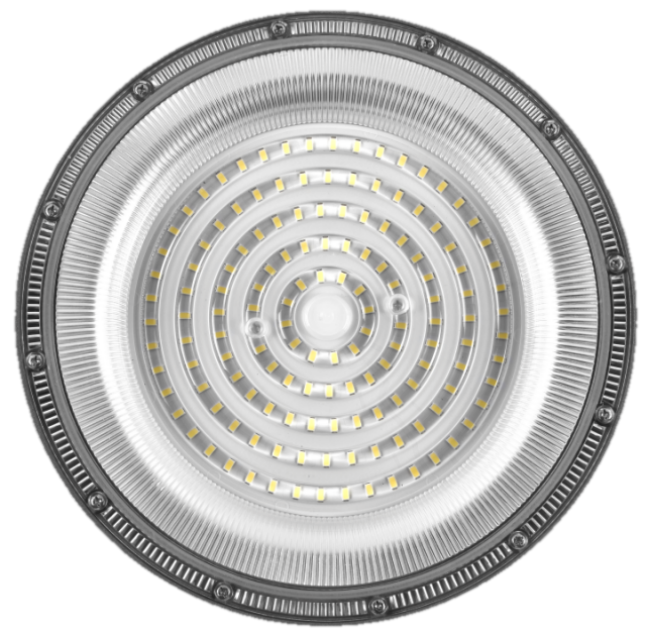
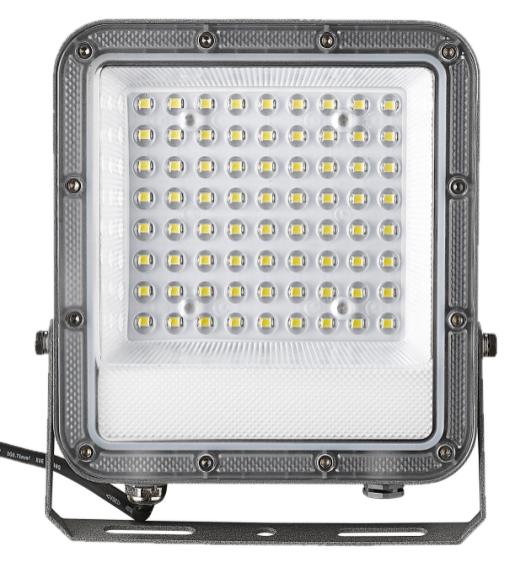
A street-light reference design on the proven YE-01 platform — the same YT2181GTE5 driver IC and architecture already lab-verified in our 100W high bay and 50W flood light. Supplied as SKD or CKD for local assembly.
| Parameter | Specification |
|---|---|
| Product type | LED Street Light · pole mount |
| Power options | 40 W / 60 W (reference design) |
| Driver platform | YE-01 · self-developed high-PF flyback driver |
| Input | 100–440 Vac · 47–63 Hz |
| Efficiency (platform-verified) | ≥ 91 % |
| PF / THD | > 0.95 / < 29 % |
| Surge immunity | 4 kV (platform-verified) |
| Housing | Die-cast aluminum · dark gray powder coating |
| Light distribution | Type II / Type III |
| Supply form | SKD / CKD (finished fixture on request) |
The YE-01 driver holds constant current from roughly 165 to 280 Vac. Below that it folds back to protect itself; above 290 Vac output is deliberately derated, so a fixture running on a 440 V feeder will light up and stay stable — it simply will not deliver full rated wattage. On our 100 W high bay test unit, output settled near 38 W at 440 Vac . We publish the full 22-point grid rather than a single headline voltage because that is the honest picture: wide input means the light survives, not that it performs identically everywhere. The street-light wattage curves are measured once a project spec is fixed.
Yes. Both wattages sit on the same single-board driver; the difference is the output current setting and the LED board string configuration. That means one driver reel and one assembly procedure covers your whole street-light range, which is usually the difference between holding two spare-part lines and holding one.
Typically 6–8 m mounting height for secondary and residential roads. Type II distribution for carriageways up to about 9 m wide, Type III where the pole sits on one side and the beam has to reach further across. We do not publish a lux grid for a reference design, because spacing depends on your road class and local lighting code. Send us the road width, pole height and target lux level, and we will run the layout with you.
IP65 protects against water jets; IP66 against powerful jets, such as driving rain at an exposed coastal or elevated site. For inland towns IP65 is normally enough and costs less. For coastal roads, or anywhere the housing faces monsoon wind directly, specify IP66 — the gasket and cable-gland cost difference is small next to a field failure.
The body is die-cast aluminium with a powder coating, which is the right starting point for coastal installations. Salt-spray endurance depends on coating thickness and pretreatment, so we confirm the exact hours against your site conditions rather than quoting a generic number. If your project is within a few kilometres of the coast, tell us at inquiry stage and we will specify the coating accordingly.
For most urban distribution circuits, no — 4 kV on the driver covers the switching transients you normally see. For poles at the end of an overhead line, in high-lightning regions, or on the same circuit as large welding or pumping loads, we recommend an external surge protector at the pole. It is a low-cost part and it protects the whole fixture.
You do, because registration schemes such as BIS, SIRIM, TISI and SNI require a locally registered entity as the applicant. Our job is to make that filing fast: we hand over the test data, BOM, driver specifications and technical file your lab and agent need. Filing as the registrant also means the certificate sits in your company name, which is worth more to you than a supplier’s certificate ever would be.
Yes — and this is the practical advantage of SKD construction. The LED board and the driver are separate assemblies held by screws and connectors, so a failed driver is a 10-minute swap by a technician with a screwdriver, not a fixture replacement. Both parts can be ordered separately in your maintenance quantities.
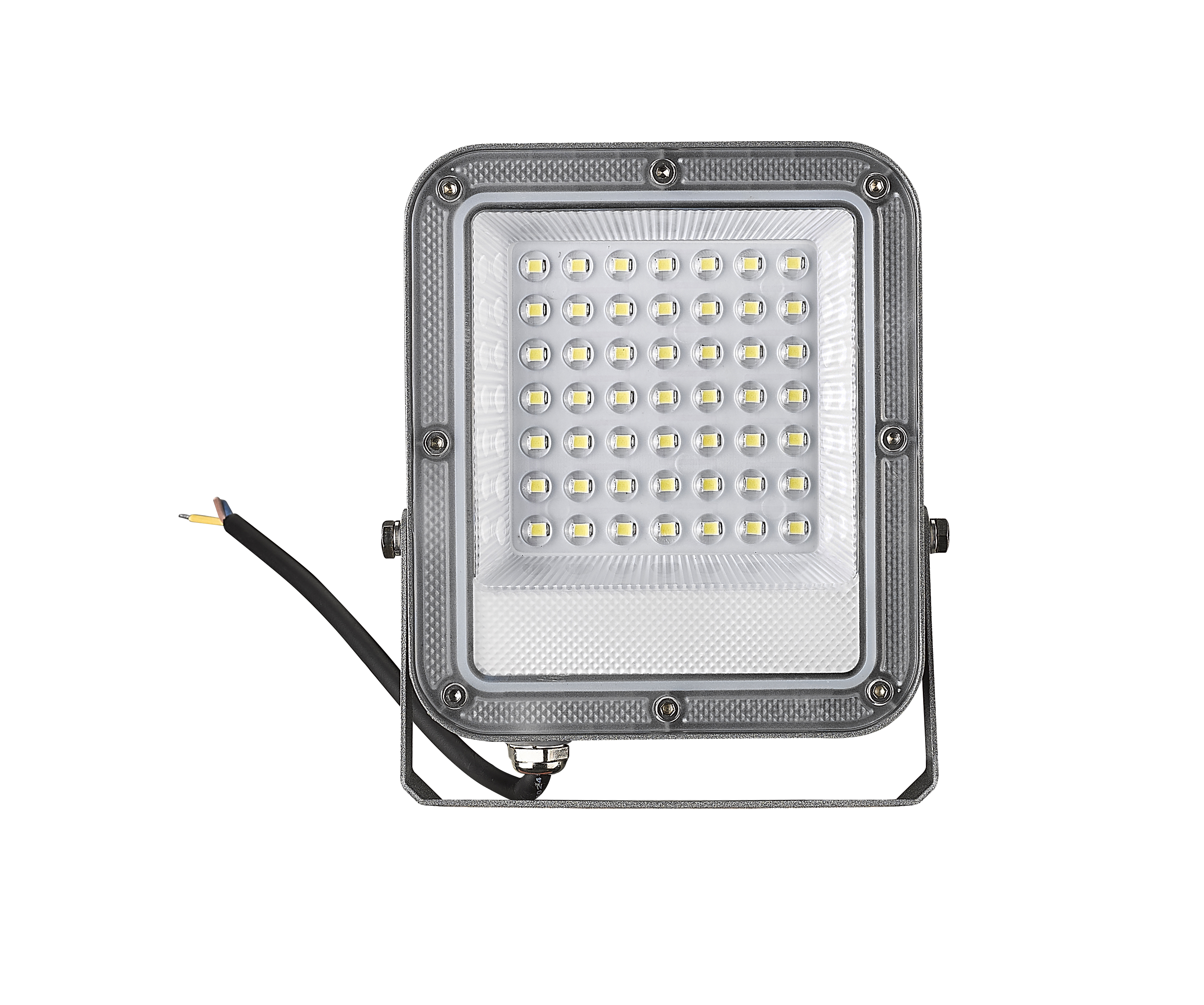
Power | 40 / 60 W Input | 100–440 Vac PF | > 0.95 Surge | 4 kV (platform)
View Details